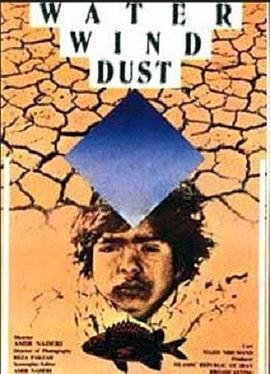
This is an unusual film of exceptional values--75 minutes long in color, with hardly any spoken dialogs. I saw this Iranian film in Farsi without English subtitles at the Early Iranian cinema retrospective on-going International Film Festival of Kerala, India. That I was watching a print without subtitles did not make a difference as there were very few lines of spoken dialogs. This is a very accessible film for any audience to enjoy--its story and values are not merely Iranian, it's universal. The film is set in rural Iran that had not tasted petro-dollar prosperity. The setting is on fringes of desert land, where water is scarce, rainfall scanty and hardly any blade of grass is green. Add to it wind and dust that buffets and whips man and animal and you can imagine plight of the people who live on the fringes of society. The film is moving tale of a young teenager returning to his village with a goat--only to find his family and villagers have moved on to escape natures vagaries and that one old man remains. He gives the goat to him and goes in search of his family. Water is scarce and well water it treated with reverence and never wasted.
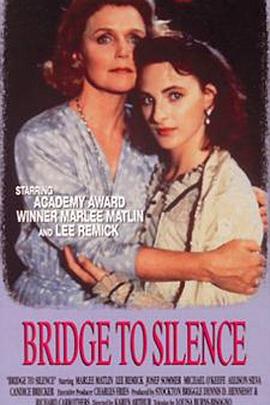
Marg Duffield (Lee Remick) is the Maine wife of Al (Joseph Sommer) whose daughter Peg (Marlee Matlin) is deaf. Peg's husband is killed in a car accident on the way to visit the Maine house, and the Duffield's take in Peg's six year old daughter, Lisa, while Peg recovers. Since Lisa is a speaking child, Marg thinks of her the way she wanted Peg to be, and seeks guardian custody. Remick's role is secondary to Matlin's, though she is presented as a tragic figure, particularly as Al refuses to help her plan to gain Lisa. Peg's deafness is said to be from a childhood case of spinal meningitis, and the teleplay by Louisa Burns-Bisogno, with story by Louisa and Tom Bisogno, reduces Remick to a textbook mother who is self-hating from guilt and therefore cannot love her own daughter. In a memorable scene, Peg angrily signs her exit to Marg, since Marg has refused to learn sign language, though Peg has learned to speak for her mother. The treatment uses the Tennesee Williams play, The Glass Menagerie, for therapy, to help Peg overcome her grief and also Marg `lose her unicorn horn' and embrace her daughter. Whilst Peg choosing to act in this play may seem an odd choice for someone grieving, what is more noticable is that Matlin is far too more glamourous to be believable as Laura. The Bisogno's include Michael O'Keefe as Dan, Peg's deceased husband's best friend and director of Actors Theatre for the Deaf, to offer Peg a new romantic interest, and thankfully she rebukes his protestations of love. Although his opinion may be influenced by his `crush', Dan tells Peg that being different is better than being normal, since the normal ones are as `common as weeds'. This philosophy reads as rather Nietzschean, on the level of artists not being restricted to the common moral code. Director Karen Arthur either has those signing also speaking or those signing being translated for the audience, though in one scene the sound of lapping waves drowns out the dialogue between Dan and Peg. She also gives Matlin some good moments, one being her scream of horror when she hears the news of the death of her husband, and another when she chases Remick down a flight of steps, hitting her.
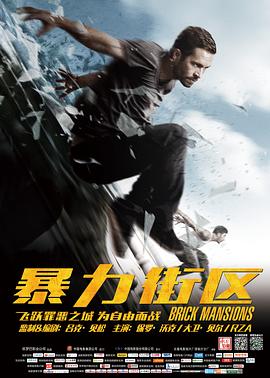
故事发生在美国底特律,不断升高的犯罪率和持续扩大的犯罪势力让警方苦不堪言,为了控制这些“不稳定的因素”,警方划出了“红砖特区”,用以隔离罪犯和平民。在特区之中,以毒枭特里梅因(罗伯特·菲茨杰拉德·迪格斯 RZA 饰)为首的犯罪集团掌控着大部分的资源和权利,构筑了一种岌岌可危的微妙平衡。 一场意外让利诺(大卫·贝尔 David Belle 饰)成为了特里梅因的眼中钉,为了引出利诺,特里梅因绑架了他的女友罗拉(卡塔利娜·丹尼斯 Catalina Denis 饰),与此同时,野心勃勃的探员达米安(保罗·沃克 Paul Walker 饰)亦希望能够将作恶多端的特里梅因捉拿归案,个性迥异但境遇相同的利诺和达米安走到了一起,决定联手。